Over 11 million US households now own an RV, revealing just how popular this style of travel has become. Yet not all RV sites are created equal. Finding the best spot can shape your comfort, convenience, and overall adventure on the road. Whether you seek a simple overnight stay or a resort-style escape, understanding what truly defines an RV site helps you choose options that fit both your needs and expectations — including the standouts featured in our roundup of the best RV parks in Texas.
Table of Contents
- What Defines An RV Site? Essential Concepts
- Primary Types Of RV Sites Explained
- Typical Features And Hookups By Site Type
- Amenities And Enhancements At Luxury Resorts
- Choosing The Right RV Site For Your Stay
Key Takeaways
| Point | Details |
|---|---|
| RV Site Essentials | RV sites are specifically designed for recreational vehicles, providing critical utilities such as electrical hookups, water connections, and waste management facilities. |
| Types of RV Sites | There are three main types of RV sites: Full Hookup, Partial Hookup, and Dry Hookup, each catering to different needs and levels of amenities for travelers. |
| Luxury RV Resort Features | Modern luxury RV resorts enhance the camping experience with recreational amenities, wellness enhancements, and glamping options, aiming to provide a comprehensive travel experience. |
| Site Selection Factors | When choosing an RV site, consider dimensions, hookup requirements, and proximity to amenities to ensure comfort and convenience throughout your stay. |
What Defines an RV Site? Essential Concepts
An RV site represents a carefully designated space within a campground or resort specifically designed to accommodate recreational vehicles. According to Wikipedia, these sites are strategically structured to provide travelers with essential amenities and services that support comfortable and convenient vehicle-based travel.
Typically, a standard RV site includes several critical infrastructure elements that enable temporary residential functionality for travelers. As Wikipedia explains, these sites often feature core utilities such as:
- Electrical Hookups: Providing AC power connections for RV systems
- Water Connections: Fresh drinking water access
- Sewer Facilities: Waste management infrastructure
- Parking Spaces: Designated areas sized for various RV lengths
The fundamental purpose of an RV site goes beyond mere parking. These spaces are engineered to transform a temporary location into a functional living environment, offering travelers a home away from home. Site classifications can vary widely, ranging from basic bare-bones locations to luxury resort-style spaces with extensive amenities like RV Resort Terminology Explained highlights.
Beyond basic utilities, modern RV sites increasingly focus on creating comprehensive experiences. Some locations now offer additional features like Wi-Fi connectivity, recreational areas, shower facilities, and community spaces that transform a simple parking spot into a comprehensive travel destination. These evolving standards reflect the growing sophistication of RV travel, where comfort and convenience have become as important as the journey itself.
Primary Types of RV Sites Explained
According to Retire Better Now, RV travelers have multiple site options to choose from, each offering unique amenities and experiences. According to Booking Ninjas, RV parks typically categorize sites into three primary types based on utility connections and service levels.
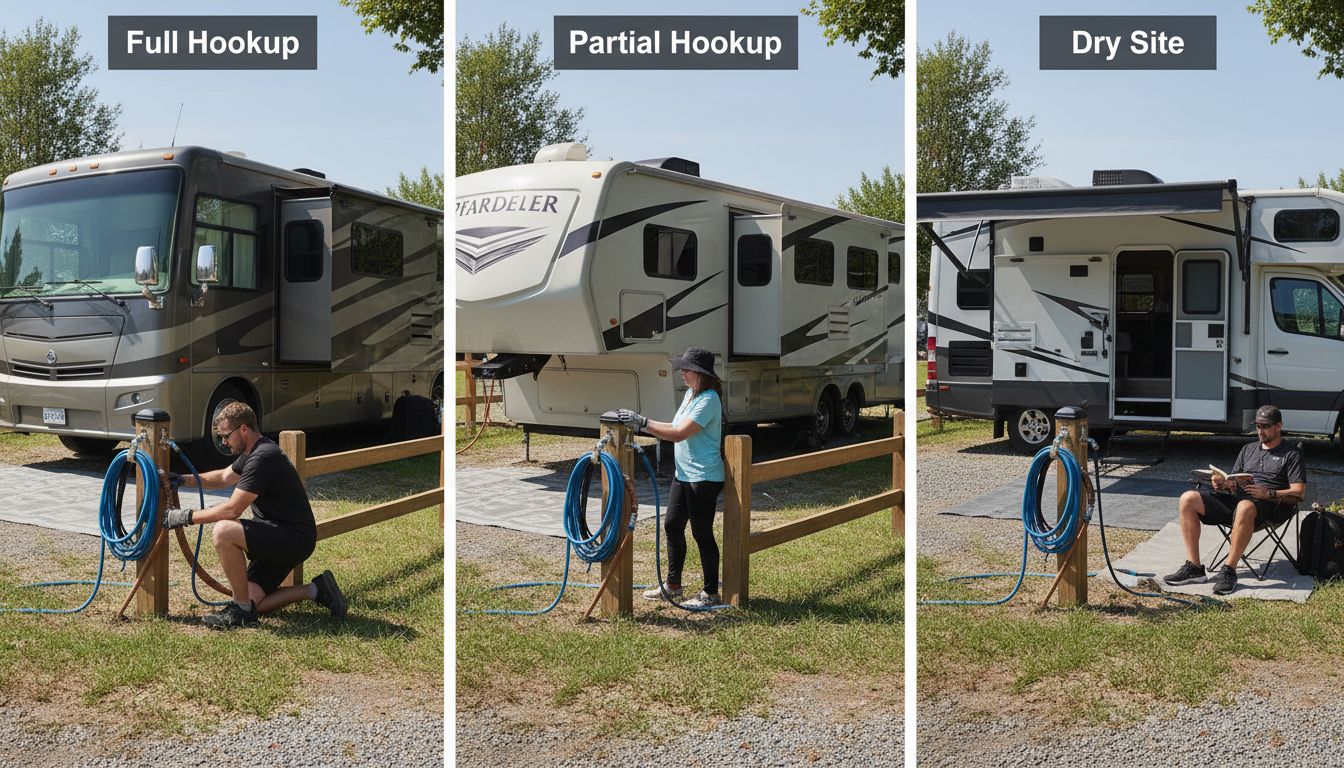
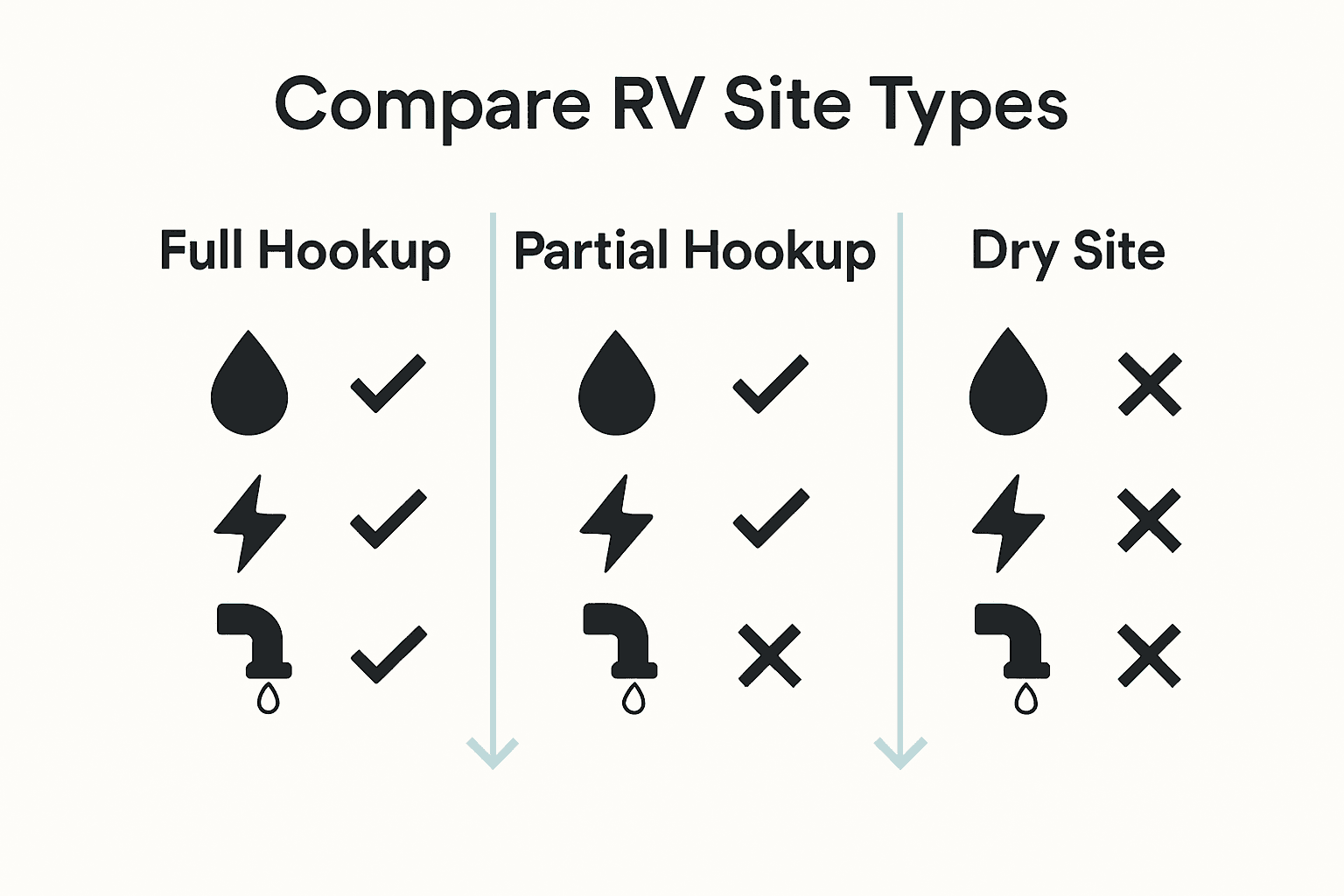
Full Hookup Sites represent the most comprehensive option for RV travelers. These premium sites provide complete infrastructure, including:
- Water connections
- Electrical hookups (30 or 50 amp)
- Sewer connections
- Spacious parking areas
Partial Hookup Sites offer a more economical alternative. These sites typically include water and electricity connections but lack direct sewer access. They are ideal for shorter stays or travelers who are comfortable managing their onboard waste tank systems and can utilize park facilities for additional services.
The most minimalist option is the Dry Hookup Site, which provides only electrical power without water or sewer connections. These sites are perfect for self-sufficient RVers who prefer a more rustic experience and are comfortable using centralized park facilities. For travelers seeking a guide to luxury RV resort experiences, understanding these site variations becomes crucial in planning the ideal trip.
Modern RV resorts increasingly recognize that site selection goes beyond mere utility connections.
 Today’s sophisticated travelers seek locations that offer not just technical infrastructure, but comprehensive experiences that blend comfort, convenience, and community. Whether you’re looking for a basic parking spot or a full-service luxury environment, understanding these site types helps you make informed decisions about your travel accommodations.
Typical Features and Hookups by Site Type
The infrastructure of RV sites varies dramatically, with each type offering unique utility configurations to meet different traveler needs. According to Booking Ninjas, RV parks design sites with strategic hookup options that cater to diverse camping styles and preferences.
Full Hookup Sites provide the most comprehensive utility package, featuring:
- 30 or 50 amp electrical connections
- Direct water hookups
- Sewer connections
- Spacious, level parking areas
- Often include cable TV and Wi-Fi
Partial Hookup Sites represent a more flexible option. These sites typically include water and electrical connections but require campers to manage waste disposal more strategically. As Booking Ninjas notes, these sites are ideal for shorter stays where travelers can utilize onboard tanks and centralized park facilities.
For those seeking a premium pull-thru full hookup experience in Texas Hill Country, understanding site layout becomes crucial. Dry Hookup Sites offer the most minimalist approach, providing only electrical power. These sites appeal to self-sufficient RVers who are comfortable using communal facilities and have robust onboard water and waste management systems.
Modern RV sites are evolving beyond basic utility connections. Today’s travelers expect comprehensive experiences that blend technical infrastructure with comfort and convenience. Whether you’re a weekend warrior or a full-time RVer, selecting the right site type can dramatically impact your travel experience, transforming a simple parking spot into a home away from home.
Amenities and Enhancements at Luxury Resorts
Luxury RV resorts have transformed the traditional camping experience, elevating outdoor stays from basic accommodations to premium destinations. According to Campground Consulting Group, high-end resorts are now strategically designing experiences that cater to travelers seeking more than just a parking spot.
Recreational Amenities have become a cornerstone of luxury RV experiences, offering guests engaging activities beyond traditional camping. These often include:
- Pickleball courts
- Mini-golf courses
- Resort-style swimming pools
- Outdoor entertainment areas
- Fitness centers
Wellness and Comfort Enhancements represent another critical dimension of luxury RV resorts. As Campground Consulting Group highlights, these can range from private hot tubs and saunas to full-scale wellness centers that provide guests with opportunities for relaxation and rejuvenation.
For travelers interested in exploring what truly constitutes a luxury camping experience, understanding these amenities becomes crucial. Glamping Options have emerged as a particularly attractive feature, with some resorts offering unique accommodations like luxury cabins and safari tents that provide an elevated outdoor experience.
Modern luxury RV resorts recognize that today’s travelers seek more than just a place to park. They are creating comprehensive destination experiences that blend comfort, recreation, and natural beauty. Whether you’re a weekend adventurer or a full-time RVer, these enhanced amenities transform a simple stay into an unforgettable journey.
Choosing the Right RV Site for Your Stay
Selecting the perfect RV site requires careful consideration of multiple factors that extend far beyond simple parking space availability. Your choice will significantly impact the overall comfort, convenience, and enjoyment of your travel experience.
Key Selection Criteria for identifying the ideal RV site include:
- Site size and compatibility with your RV dimensions
- Electrical hookup amperage requirements
- Proximity to amenities and facilities
- Level of privacy and site orientation
- Ground surface and parking conditions
- Accessibility for large vehicles
Practical Considerations play a crucial role in site selection. Consider your specific travel needs, such as trip duration, desired amenities, and personal comfort preferences. For short-term stays, partial hookup sites might suffice, while long-term travelers often require full hookup locations with comprehensive utility access.
Travelers looking to streamline their booking process can explore our comprehensive RV resort reservation guide to understand the nuances of site selection and reservation strategies. Advanced Planning is key. Research potential destinations thoroughly, review site maps, and communicate directly with resort management about specific site requirements and potential limitations.
Ultimately, the right RV site transforms a simple location into your temporary home. By carefully evaluating your needs, understanding site features, and planning ahead, you can ensure a comfortable, convenient, and enjoyable travel experience that meets both your practical requirements and personal preferences.
Discover the Perfect RV Site for Your Texas Hill Country Adventure
Choosing the right RV site can feel overwhelming with all the options from full hookups to dry sites. You want a spot that matches your needs for comfort, convenience, and the ideal balance between luxury and outdoor charm. Whether you crave spacious parking with full utilities or a cozy retreat near exciting amenities the key is finding a place that transforms your stay into a true home away from home.
At Horseshoe Ridge RV Resort, we specialize in blending premium RV site types with luxury comforts that match your travel style. Our resort offers full hookup sites nestled in the scenic Texas Hill Country with easy access to resort-style features including a sprawling pool, pickleball courts, and spa-like bathhouses. For a change of pace you can also relax in one of our cozy cabins perfect for families and romantic getaways. Explore all we offer on our landing page and plan a stay where every detail supports your perfect RV experience.
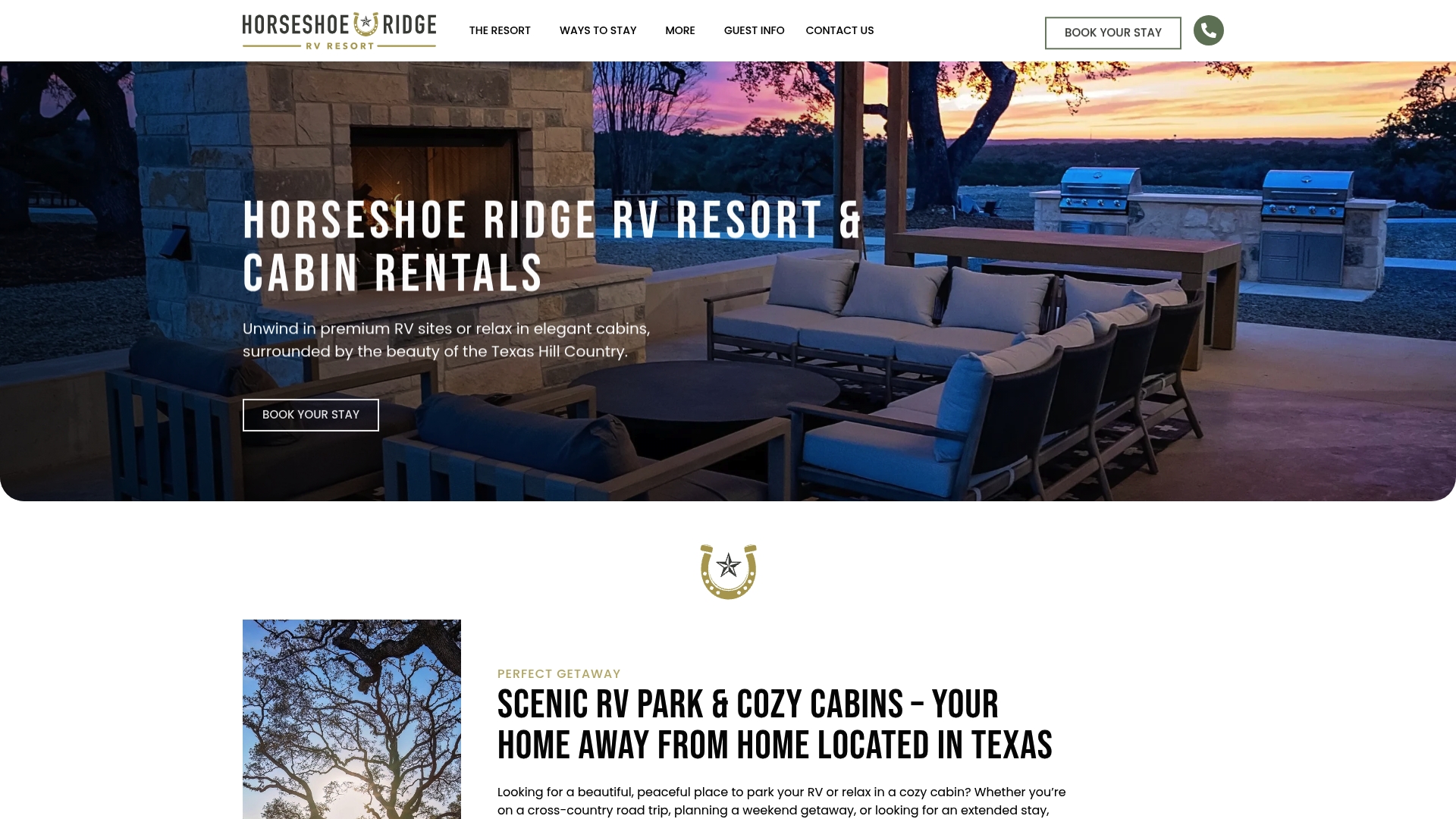
Why settle for less when you can have a full-service luxury RV getaway. Start your reservation today at Horseshoe Ridge and secure the ideal site that meets your needs for amenities private space and outdoor excitement. Visit Horseshoe Ridge RV Resort now and turn your next trip into a memorable hill country escape.
Frequently Asked Questions
What is an RV site?
An RV site is a designated space within a campground or resort specifically designed for accommodating recreational vehicles, providing essential utilities such as electrical hookups, water connections, and sewer facilities.
What are the different types of RV sites?
The three primary types of RV sites are Full Hookup Sites (with water, electricity, and sewer), Partial Hookup Sites (with water and electricity but no sewer), and Dry Hookup Sites (with only electrical power).
What amenities can I expect at luxury RV resorts?
Luxury RV resorts offer a range of amenities, including recreational facilities like pickleball courts and swimming pools, wellness enhancements such as private hot tubs, and unique accommodations like luxury cabins and safari tents.
How do I choose the right RV site for my needs?
To select the ideal RV site, consider factors like site size, electrical hookup requirements, proximity to amenities, level of privacy, and the ground surface conditions. Advanced planning and communication with resort management can help ensure your needs are met.