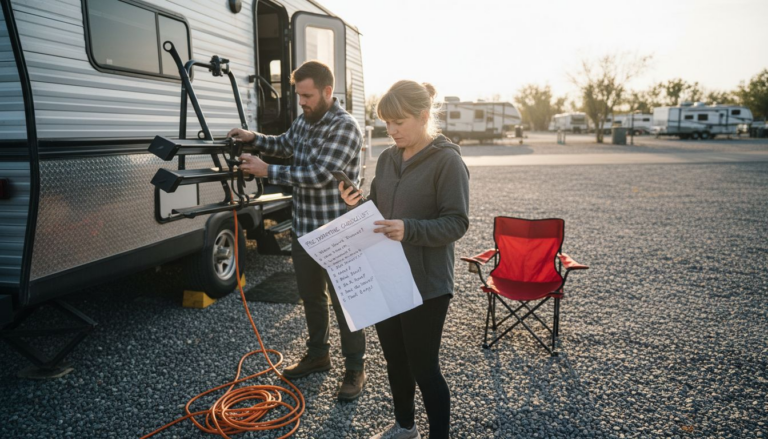
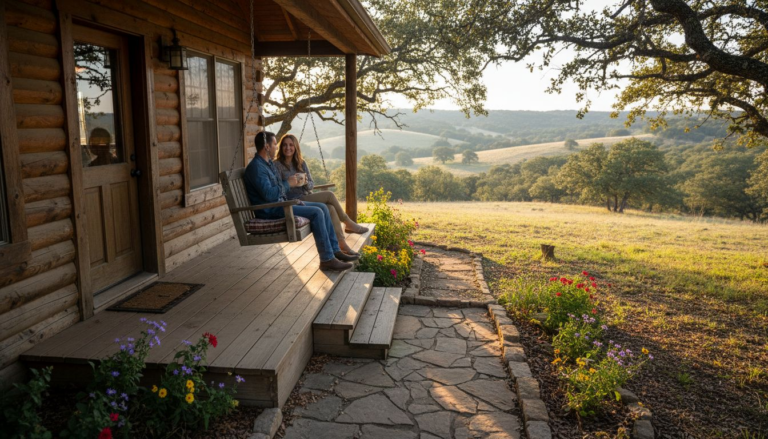
Bold safety measures make all the difference for every American family exploring the Texas Hill Country’s upscale RV resorts. Over 80 percent of travelers say a secure environment tops their priorities when choosing a luxury destination. From site setup to emergency plans, knowing what to inspect and prepare means you and your loved ones can relax and enjoy your vacation with true peace of mind. Discover practical strategies to keep your RV experience comfortable, safe, and worry free.
Table of Contents
- Step 1: Review Essential RV Setup and Site Safety
- Step 2: Inspect Resort Amenities for Safety Features
- Step 3: Establish Emergency Plans and Communication
- Step 4: Verify Personal Security and Property Protection
- Step 5: Confirm Adherence to Resort Safety Policies
Quick Summary
| Key Insight | Explanation |
|---|---|
| 1. Conduct a Site Survey | Perform a thorough examination of the campsite for hazards before parking your RV to ensure a safe setup. |
| 2. Inspect Resort Amenities | Assess pools and recreational areas for safety equipment and hazards to ensure a safe environment for guests. |
| 3. Establish Emergency Plans | Create a clear communication plan and store important emergency contacts for a rapid response during crises. |
| 4. Enhance Personal Security | Secure your RV and belongings using additional locks and be mindful of your surroundings to prevent theft. |
| 5. Comply with Safety Policies | Understand and adhere to the resort’s safety guidelines to maintain security and enhance the overall experience. |
Step 1: Review Essential RV Setup and Site Safety
Arriving at your luxury RV resort requires a systematic approach to ensure a safe and comfortable setup. Your first priority is thoroughly evaluating the campsite and preparing your recreational vehicle for a secure stay. Roadtrippers provides an excellent guide for understanding site assessment that can help streamline this critical process.
Begin by performing a comprehensive site survey before parking. Walk the entire designated area looking for potential obstacles such as low hanging branches, uneven ground, hidden rocks, or ground-level electrical hazards. Check the terrain slope carefully and identify the most level spot for parking your RV. Confirm the site provides sufficient space for slide-outs and awning extensions without interference from trees or nearby structures. Verify the location of electrical, water, and sewer hookups to ensure convenient access and proper connection.
Once you identify a suitable parking spot, engage your RV’s emergency brake and use stabilizing jacks to level the vehicle. Connect utilities systematically starting with electrical power, then water hookups, and finally sewer connections. Use surge protectors for electrical connections and inspect all cables and connections for potential wear or damage. Secure all loose items inside the RV to prevent shifting during setup and double-check exterior compartments are properly closed.
Pro tip: Always carry a basic toolkit with leveling blocks, wheel chocks, and a voltage meter to handle unexpected setup challenges and ensure a smooth arrival at your luxury RV resort.
Step 2: Inspect Resort Amenities for Safety Features
Ensuring the safety of resort amenities is a critical step in creating a secure and enjoyable luxury RV experience. Comprehensive safety inspections help identify potential risks and protect guests, making this process an essential part of your resort stay preparation.
Start by conducting a thorough visual assessment of key amenity areas. Check the resort pool for proper fencing, clear depth markers, and well-maintained safety equipment like life rings and first aid stations. Examine recreational spaces such as pickleball courts, outdoor grills, and communal areas for potential hazards like uneven surfaces, loose railings, or poorly maintained equipment. Verify that fire pits have proper safety barriers and are located at a safe distance from flammable structures.
Pay close attention to the amenity center and bath house facilities. Look for clear emergency exit signs, functional smoke detectors, and well-lit pathways. Inspect electrical outlets near water sources to ensure they have proper ground fault circuit interrupter (GFCI) protection. Check that shower and restroom areas are clean, have non slip flooring, and provide adequate privacy and security features. Verify that common areas have visible emergency contact information and that staff appears trained and attentive to guest safety.
Pro tip: Always carry a small flashlight and personal safety alarm to supplement resort safety features and provide an extra layer of personal security during your stay.
Step 3: Establish Emergency Plans and Communication
Creating a comprehensive emergency communication strategy is fundamental to ensuring your safety during your luxury RV resort stay. Developing a robust emergency response plan helps you prepare for potential unexpected situations, providing peace of mind and critical protection for you and your fellow travelers.
Begin by obtaining the resort’s emergency contact information immediately upon arrival. Save the resort office phone number, local emergency services numbers, and the nearest hospital contact in your mobile phone and write them down as a backup. Identify the locations of emergency exits, fire extinguishers, and first aid stations throughout the resort amenities. Discuss and establish a clear communication plan with your travel companions that includes a designated meeting point in case of separation during an emergency.
Ensure your mobile devices are fully charged and consider bringing a portable battery pack as a backup power source. If traveling in an area with potentially unreliable cell service, invest in a portable two way radio or satellite communication device to maintain contact. Familiarize yourself with the resort’s specific emergency protocols by speaking with staff and reviewing any provided safety information. Take note of evacuation routes and understand the resort’s procedures for different types of emergencies such as severe weather, medical incidents, or other unexpected events.
Pro tip: Create a digital and physical emergency information packet that includes copies of important documents like insurance cards, medical information, and emergency contacts stored in an easily accessible location within your RV.
Step 4: Verify Personal Security and Property Protection
Protecting yourself and your valuable property is an essential aspect of enjoying a worry free luxury RV resort experience. Comprehensive personal security strategies help travelers minimize risks and create a safe environment during their stay, ensuring peace of mind throughout their vacation.
Begin by thoroughly assessing your RV and campsite for security vulnerabilities. Install additional locks on external storage compartments and invest in a wheel lock or trailer hitch lock to prevent unauthorized movement. Use cable locks to secure bicycles, outdoor equipment, and other valuable items. When leaving your RV unattended, close all windows and blinds to prevent potential theft opportunities. Consider using motion sensor lights around your campsite and parking area to deter unexpected visitors and enhance overall visibility during nighttime hours.
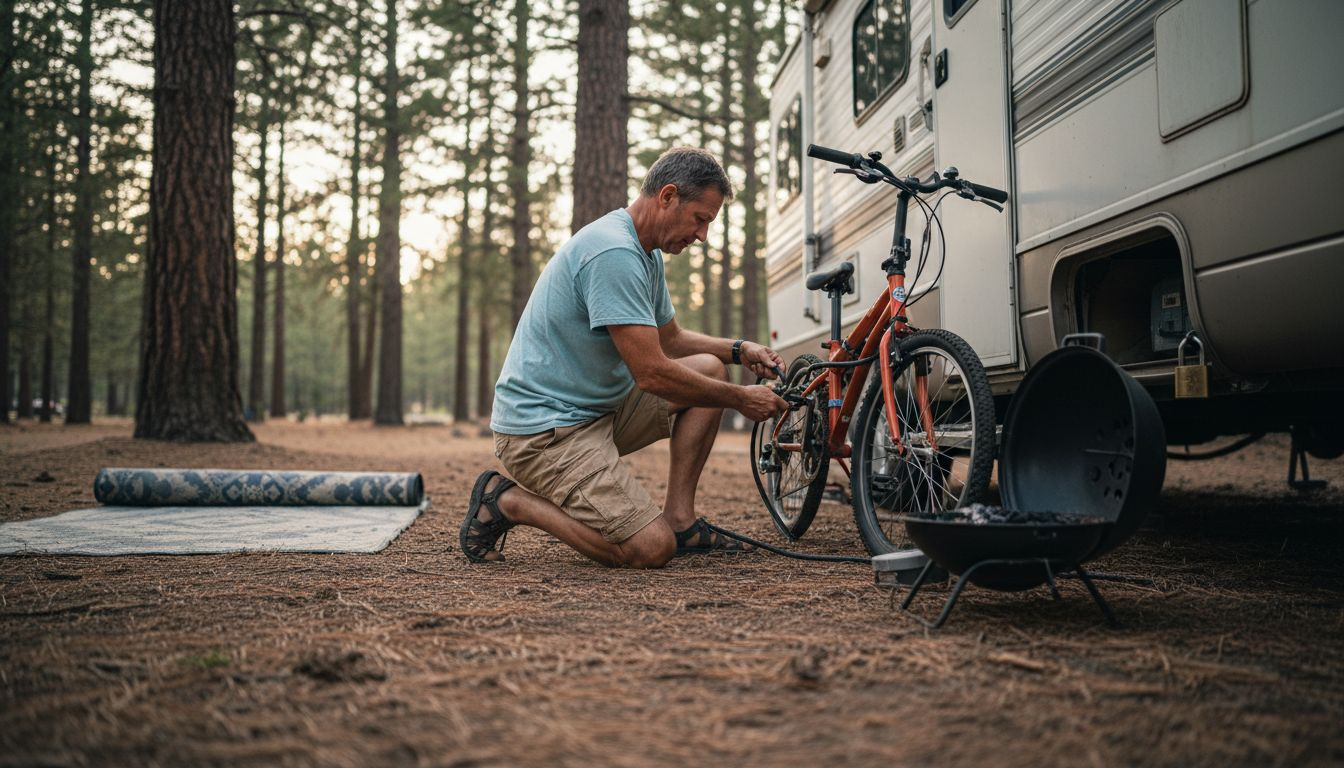
Utilize the resort’s security features and communicate proactively with staff about your safety concerns. Take advantage of any on site security personnel or camera surveillance systems. Keep your RV keys and important documents in a secure location, preferably in a locked safe or hidden compartment. When exploring resort amenities or local attractions, use a money belt or hidden travel wallet to protect your personal identification and financial resources. Always maintain awareness of your surroundings and trust your instincts if a situation feels uncomfortable or suspicious.
Pro tip: Create digital backups of important documents and store encrypted copies in a secure cloud service as an additional layer of protection in case of unexpected loss or theft.
Step 5: Confirm Adherence to Resort Safety Policies
Understanding and following resort safety policies is crucial for maintaining a secure and enjoyable luxury RV experience. Comprehensive safety checklists help travelers ensure full compliance with critical resort regulations and minimize potential risks during their stay.
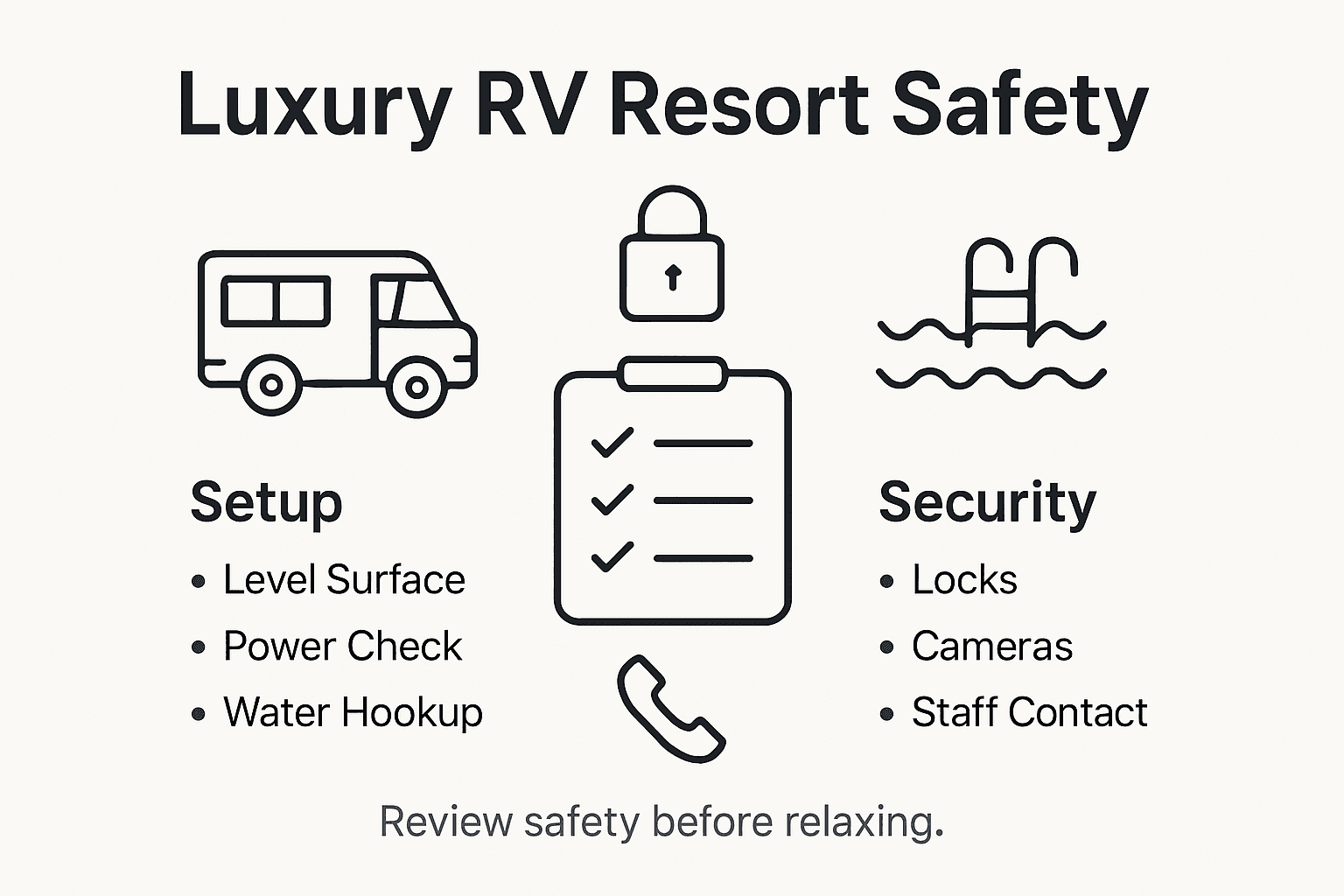
Start by requesting a detailed copy of the resort’s safety policies and guidelines from the front desk or management office. Carefully review these documents to understand specific rules about vehicle positioning, noise levels, fire safety, pool and recreational area usage, and pet regulations. Pay special attention to sections covering emergency procedures, speed limits within the resort, waste disposal requirements, and guidelines for using shared amenities. Verify that your RV setup and personal conduct align completely with these established policies.
Engage proactively with resort staff to clarify any policy details you do not fully understand. Ask questions about specific safety protocols, particularly those related to emergency evacuations, severe weather procedures, and site specific restrictions. Take time to observe posted signage throughout the resort, which often provides critical safety information and policy reminders. Be prepared to adjust your behavior or setup if you identify any potential policy violations, prioritizing both your safety and respect for the resort’s established guidelines.
Pro tip: Photograph or digitally scan the resort’s safety policies to keep a convenient reference on your mobile device for quick access during your stay.
Compare the benefits of proactive versus reactive safety strategies during your RV stay:
| Strategy Type | Example Action | Main Benefit |
|---|---|---|
| Proactive | Pre-trip site survey and toolkit prep | Prevents many common mishaps |
| Reactive | Responding to an equipment failure | Minimizes impact after an incident |
| Proactive | Reviewing emergency exits on arrival | Enhances evacuation speed and readiness |
| Reactive | Reporting hazards to resort staff | Ensures issues are addressed for future guests |
Here’s a quick reference to essential safety considerations at a luxury RV resort:
| Area of Focus | Key Priority | Why It Matters |
|---|---|---|
| Site Setup | Vehicle level and utility checks | Prevents accidents and equipment damage |
| Resort Amenities | Inspect pools, recreation, bath house | Reduces injury risk and safeguards guests |
| Emergency Plans | Communication and document storage | Ensures rapid response in crises |
| Personal Security | Locks, lighting, valuables protection | Deters theft and personal harm |
| Policy Compliance | Understanding resort rules | Maintains safety and positive experience |
Secure Your Luxury RV Experience with Confidence at Horseshoe Ridge RV Resort
Ensuring a safe and worry free stay is the cornerstone of enjoying your luxury RV vacation. This article highlights essential steps such as thorough site setup, amenity safety inspections, emergency planning, and personal security measures. At Horseshoe Ridge RV Resort nestled in the heart of the Texas Hill Country, we understand these priorities deeply and provide an environment designed to support your safety and comfort at every turn.
Experience peace of mind with our well maintained resort amenities including a massive resort style pool, pickleball courts, and a spa like bath house, all shaped with your security in mind. We invite you to explore how our thoughtfully crafted resort policies and attentive staff help you effortlessly comply with safety best practices covered in the checklist. Whether you plan a short getaway or a monthly stay, prepare to enjoy a luxurious and secure retreat. Start your stress free journey today by booking your spot at Horseshoe Ridge RV Resort. Discover all our offerings including cozy cabins and premium RV sites for a stay where every safety detail is cared for.
Take control of your adventure now and connect with us to ensure your luxury RV resort stay is not only elegant but also safe and well protected. Visit Book Your Stay to reserve your secure place in the Texas Hill Country or learn more about how you can optimize your setup with us before you arrive.
Frequently Asked Questions
What should I check during the site setup at an RV resort?
To ensure a secure luxury stay, perform a thorough site survey, checking for obstacles like low hanging branches and uneven ground. Identify a level parking spot and confirm access to utilities like electrical, water, and sewage connections before setting up your RV.
How can I ensure my RV is secure during my stay at a luxury resort?
Assess your RV for security vulnerabilities by installing additional locks and using cable locks for outdoor equipment. Always close windows and blinds when leaving your RV unattended to deter potential theft.
What safety features should I look for in resort amenities?
Inspect amenities such as pools and recreation areas for safety equipment, proper fencing, and well-maintained facilities. Check for clear emergency exit signs and that communal spaces are free of potential hazards like uneven surfaces.
How can I establish an effective emergency communication plan at the resort?
Immediately gather the resort’s emergency contact information and save it on your mobile device. Designate a meeting point with your travel companions and ensure all devices, including backup batteries, are charged and ready for use in case of an emergency.
Why is it important to follow the resort’s safety policies?
Adhering to the resort’s safety policies helps prevent accidents and ensures a positive experience for all guests. Review the safety guidelines provided by the resort upon arrival and adjust your setup and behavior as necessary to comply with those rules.
What items should I include in my emergency information packet?
Create both a digital and physical emergency information packet that includes copies of your insurance cards, medical information, and emergency contacts. Keep this packet in an easy-to-access location within your RV for quick reference in case of unexpected situations.
Recommended
- RV Resort Safety Standards Shaping Hill Country Stays
- Safety Checklist for RV Resorts: A Complete Step-by-Step Guide | Horseshoe Ridge RV
- Camper Maintenance Checklist for Smooth RV Travel
- The Essential Guide to Luxury RV Park Benefits | Horseshoe Ridge RV
- Pool Builder The Villages FL | R & R Swimming Pools