

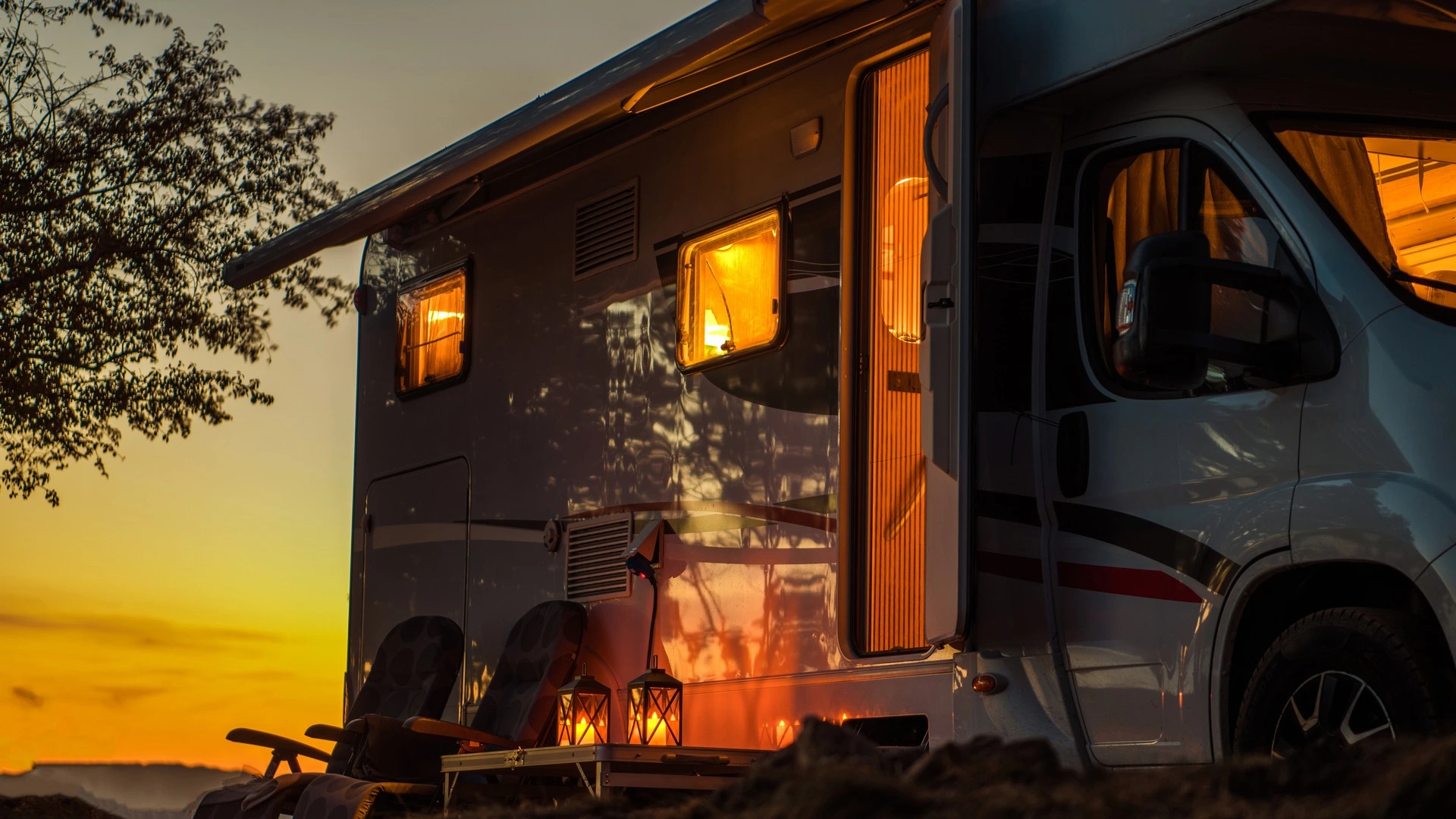
A good RV camping checklist saves you the four most common Hill Country trip mistakes: forgetting essential gear, packing wrong for the weather, missing safety basics, and overpacking junk you'll never use. This guide covers everything you need — RV gear, food, clothing, safety, entertainment, tech, pets, and pre-departure prep — for a Texas Hill Country trip. If you're still nailing down where to stay, our guide to planning the perfect Hill Country RV trip walks through routes, seasons, and base camps; this list assumes you've got that part handled and now you're packing.
Pack in eight categories: RV technical gear (hookups, leveling blocks, surge protector), food and cooking, weather-appropriate clothing, safety and first aid, outdoor gear, tech, pet supplies, and pre-departure checks. Hill Country afternoons and nights sit a long way apart in every season, so pack for both ends — sun protection in summer, fleece layers in fall and winter, rain gear year-round. Ready to book a base camp in Wimberley, TX? Call 737-307-2288 or reserve online. Staying 28 days or more? Those are arranged by phone.
Why Is a Packing Checklist Worth Using?
A checklist does four things a mental list can't. It catches the items you'd otherwise forget — cooking utensils, the first aid kit, the surge protector, the dog's food. It keeps you from overpacking, which is the quiet tax on storage-bay space. It lets you organize by category instead of throwing everything into the front cargo bay. And it lets your travel partner double-check the load without re-asking what's already packed.
First-timers forget the same items most often: surge protectors, the right sewer hose adapter, leveling blocks, and a real first aid kit. Repeat RVers forget the small stuff — extra propane, paper maps for spotty cell areas, a backup pair of shoes for wet ground. The list below covers both.
How Do You Pick the Right Hill Country RV Park?
Before packing, lock in where you're staying — the site itself changes what you need to bring. Five things to confirm:
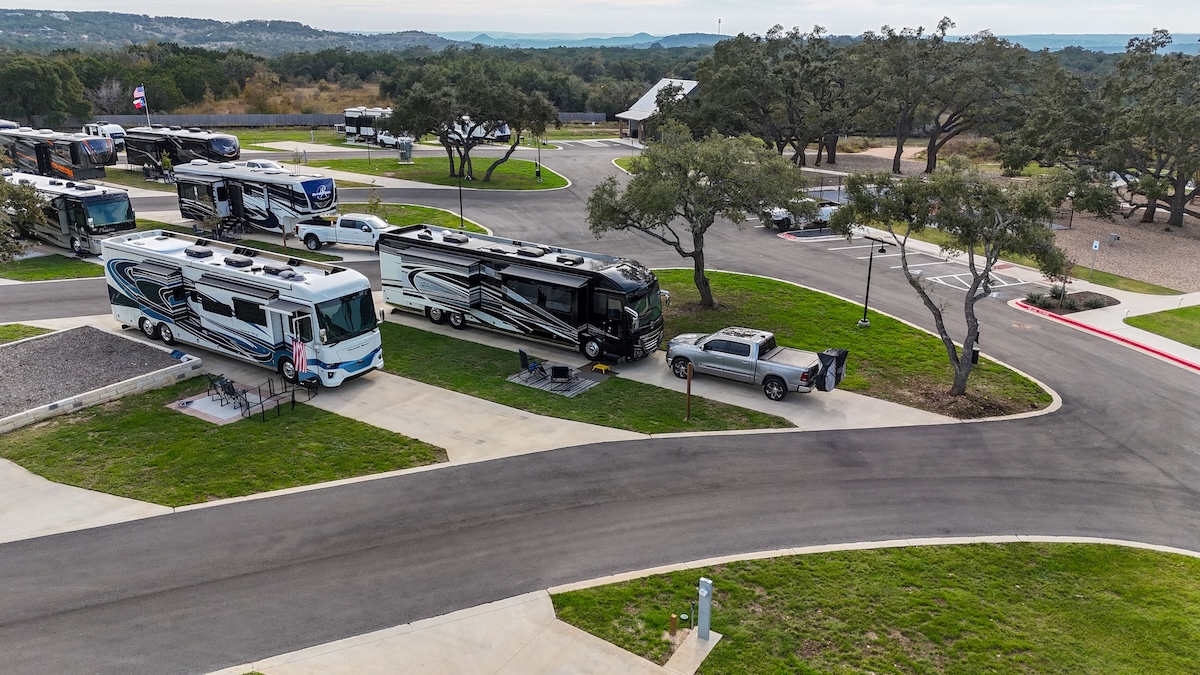
Horseshoe Ridge RV Resort in Wimberley, TX hits all five: 124 full-hookup sites across three tiers in pull-through and back-in configurations, hardwired fiber Wi-Fi at every site, big-rig-friendly pull-throughs, pets welcome resort-wide, and 31 acres about 45 minutes from Austin and 70 from San Antonio — minutes from Jacob's Well and Blue Hole.
Travelling without an RV? All three of our cabin rentals are pet-friendly and carry a two-night minimum. One thing to sort before you book anywhere: rigs older than 10 years need pre-approval here, and it's a common requirement at resorts in this class — worth asking early rather than at the gate.
What Should Every Hill Country RV Packing List Include?
Nine categories, and the items in each that people most often wish they'd packed. Full detail on each follows below.
| Category | Don't Leave the Driveway Without |
|---|---|
| Hookups | Surge protector matched to your amp service, sewer hose with the right adapter, drinking-water-rated freshwater hose, 90-degree water elbow |
| Setup | Leveling blocks, wheel chocks, RV-rated GPS, tire pressure gauge |
| Kitchen & food | Cast iron skillet, one sharp knife, two to three days of planned meals, biodegradable dish soap |
| Clothing | Layers for a 30-degree swing, rain gear, closed-toe hiking shoes, swimsuit |
| Safety & first aid | Stocked first aid kit, fire extinguisher, one flashlight per person, roadside kit |
| Documents | Registration, insurance, reservation confirmation, pet vaccination records — digital and paper |
| Outdoor & downtime | Camping chairs, daypack, binoculars, a deck of cards or a board game |
| Tech | Power bank, downloaded offline maps, hotspot as backup, Wi-Fi extender if you're not on fiber |
| Pets | Collapsible bowls, 50% more food than you think, two leashes, current ID tags, crate or pen |
Print this table or screenshot it — it's the version worth having on your phone in the storage bay.
What RV Gear Do You Need to Pack?
The technical gear is what separates a stress-free trip from a frustrating one. None of it is glamorous and most of it lives in the storage bay year-round — but missing one piece can shut down a stay.
Hookup Essentials. RV sewer hose with the right adapter (some sites use angled connections, others straight), a drinking-water-rated freshwater hose, a surge protector matched to your rig's amperage (30-amp or 50-amp), and extension cords sized for your setup. A 90-degree water elbow keeps your hose threading from kinking at the spigot. Pack a spare propane cylinder too — and if you run low mid-stay here, valet propane refills are available on site: motorhomes and Class C's drive over to the filling station, and removable 30 lb cylinders get picked up at your site, filled and returned.
Setup Gear. Leveling blocks, wheel chocks, an RV-rated GPS that knows about low bridges, and a tire pressure gauge. The GPS matters — a regular car GPS will route you under bridges you can't fit through, which is the kind of mistake that ends a trip.
Sleeping Essentials. Bedding sized to your bunk, extra blankets for cool Hill Country nights (temperatures drop more than first-timers expect), and pillows you actually like — RV mattresses run firmer than home beds.
For the mechanical side of pre-trip prep — tire pressure, fluids, exterior inspection — our camper maintenance checklist covers what to verify before pulling out.
What Food Do You Need to Pack?
Meal planning is the easiest way to cut trip stress. Pre-plan two to three days of meals, then keep ingredients flexible enough to adapt to what's available locally. The Hill Country makes that easy — Wimberley's farmers' market runs the first Saturday of the month, BBQ in Driftwood and Lockhart is worth a drive, and Fredericksburg wineries handle a night off from cooking.
Pantry Staples. Rice, pasta, oats, canned beans, tuna and soup handle most quick meals. Bring seasonings and condiments — the rig's pantry is too small to over-pack but too valuable to skip. Coffee (ground, or pods if you have a single-serve maker), tea and breakfast items keep mornings simple.
Fresh and Frozen. Meat, cheese, eggs, fruit, vegetables and dairy. Pre-chop vegetables and marinate meats at home — campsite prep is faster when the work's already done.
Cooking Gear. Cast iron skillet (the most versatile piece of RV cookware), a cooking pot, one sharp knife, cutting board, aluminum foil, ziplock bags, biodegradable dish soap and dish towels. A propane or electric camp stove handles outdoor cooking when you don't want to heat the rig in summer.
Storage Tip: collapsible kitchenware — silicone bowls, fold-flat colanders — saves real cabinet space without giving up function, and a small clear bin under the sink keeps cleaning supplies findable. Packing light on purpose? Our Wimberley shopping and grocery guide covers what's close by, and the Trading Post inside the Amenity Center stocks the basics on a 24/7 honor system.
Planning your Texas Hill Country escape? Browse RV sites, cabins, and availability.
Explore the Resort →What clothing do you need for Hill Country weather?
Hill Country weather varies more than first-time visitors expect. Daytime summer temperatures push past 95°F. Nighttime in spring and fall drops into the 50s. Winter cold snaps can hit the 20s overnight. Pack for both extremes regardless of the season.
Light, breathable clothing in moisture-wicking fabrics. Sun hat and sunglasses (the Texas sun earns the warning). Swimsuit for river and swimming-hole days at Jacob's Well, Blue Hole, or the Guadalupe. Reef-safe sunscreen if you're swimming in natural springs. Lightweight cover-up for evenings when temperatures drop and mosquitoes come out.

Fleece jackets and hoodies for layering. Wool socks (they beat cotton for both warmth and dampness). Gloves and thermal underwear for cold snaps. Long pants for hiking — Hill Country brush includes cedar and oak that scratch bare legs. A warm hat for early mornings around the fire pit.
Year-round essentials regardless of season: rain gear (sudden Hill Country thunderstorms are common in spring and fall), sturdy closed-toe shoes for hiking, comfortable walking shoes for town days, and at least one outfit you can change into after a wet activity. Vacuum-sealed clothing bags save significant closet space.
What Safety Gear Should You Bring?
Safety gear is the category most travelers underpack until something goes wrong. None of it takes much space, and all of it matters when you need it.
Save the address and phone number of the nearest emergency room and of the resort office before you leave, so you're not searching for either when signal drops.
What outdoor and entertainment gear is worth bringing?
Hill Country has enough outdoor activities to fill a week. Pack for both planned activities (hiking, swimming, tubing) and slower evenings at the campsite.
Hiking boots with good grip (Hill Country limestone is slick when wet), a daypack with water bottle pockets, fishing gear and Texas freshwater license if planning to fish, a kayak or paddleboard if your tow vehicle can carry one. Binoculars for wildlife watching — Hill Country birding is excellent year-round.

Camping chairs (one per person), a small folding table, lighter and long matches, s'mores supplies, marshmallow roasting sticks, and a fire pit cover if your site has an open ring. Most resorts (including Horseshoe Ridge) sell firewood on-site through the Trading Post — easier than transporting it.
Slow-time entertainment. A few books, a deck of cards, a board game that travels well, and a camera or GoPro for capturing the trip. If you're traveling with kids, throw in a soccer ball, frisbee, or cornhole set — most resort-style parks have open green space that handles them.
For specifics on activities to plan around your trip, our roundup of 8 best things to do in Wimberley, Texas covers the local highlights. The amenity guide for Texas RV travelers covers what to expect on-property at most resort-style parks.
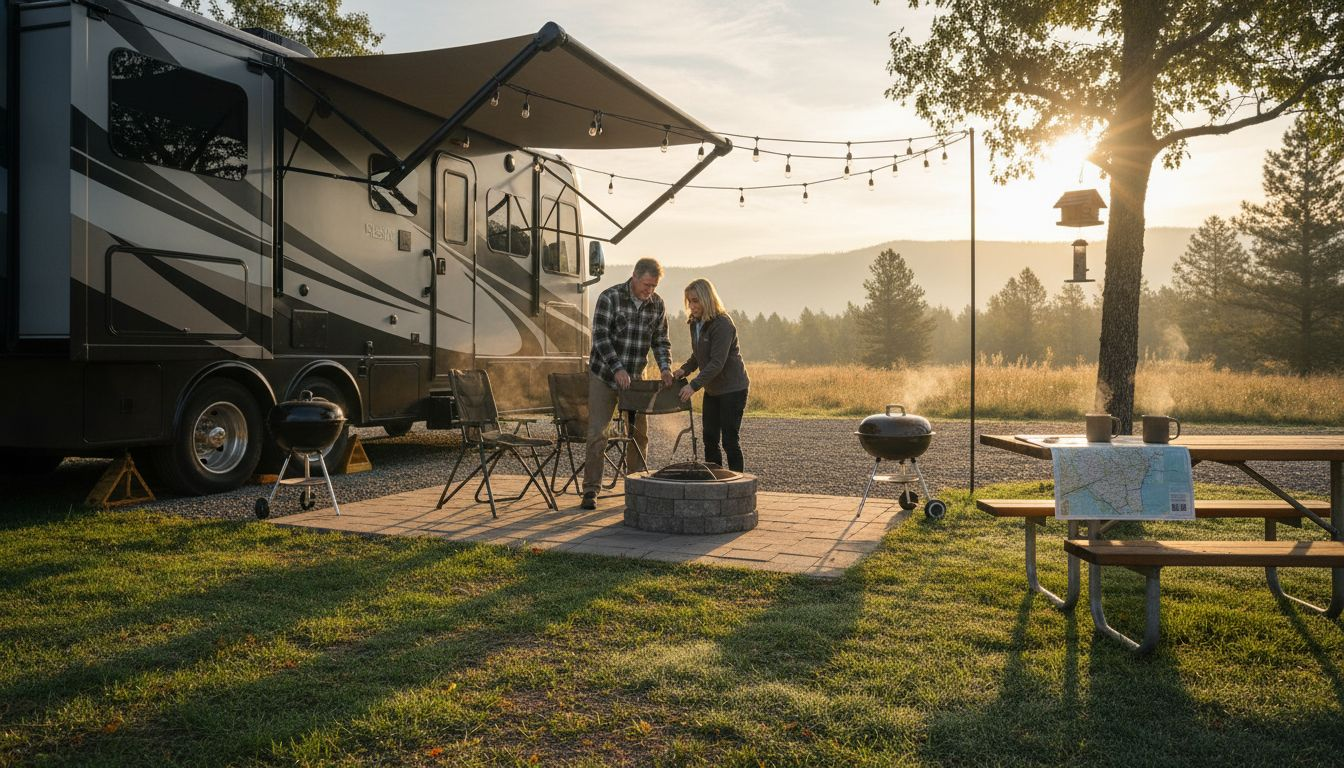
Do You Need Tech Gear for an RV Trip?
If you're remote-working, streaming, or staying longer than a weekend — yes. The right tech kit takes most of the frustration out of staying connected on the road.
Connectivity Gear. A Wi-Fi booster or signal extender if you're staying somewhere without fiber, a mobile hotspot as backup — coverage varies by carrier and by stretch of road out here, so test yours before you rely on it — and a power bank that can charge a laptop. A solar panel is worth packing if boondocking is part of the trip. Note that generators are prohibited at Horseshoe Ridge without written permission, so plan power around hookups or solar for the on-resort portion of your stay.
Navigation. The RV-rated GPS from the gear section, plus downloaded offline maps on your phone for the stretches between small towns. Paper maps as backup — they don't run out of battery.
If reliable connectivity is non-negotiable, prioritize resorts that advertise fiber Wi-Fi at every site rather than shared property-wide signal. For remote work, the difference is night and day.
What Do Pet Owners Need to Pack?
Pets add roughly 15 to 20 specific items. Food and water bowls (collapsible silicone ones save space), at least 50% more food than you think you'll need, a leash and a backup leash, harness, current ID tags with your phone number, a recent photo of your pet on your phone in case they get loose, and waste bags.
Comfort Items. A familiar bed and a few favorite toys help with the transition to an unfamiliar space. Bring a crate or pen for the times you need to leave them inside the rig — Texas summer heat makes leaving pets in vehicles dangerous even with windows cracked.
Health and Safety. Vaccination records (bring proof — it's required here), prescription medications with extras, a basic pet first aid kit, tick prevention, and contact details for the nearest emergency vet. Confirm the pet policy before you book, because counts and fees vary by property. Ours: pets are welcome resort-wide and all three cabins are pet-friendly, up to 3 pets per campsite and 2 per cabin, a flat $50 for up to two cabin pets, non-aggressive pets only, on a 6-ft leash inside the resort — full detail on rules and policies. Our roundup of pet-friendly RV resorts in Texas covers what to look for elsewhere.
Ready to book? Sites and cabins fill up fast — reserve your spot today.
Reserve Your Stay →Extended stays lean toward living rather than camping: a heated water hose for freezing weather, a second set of hoses, more storage bins than a weekend needs, mail forwarding sorted before arrival, and tank treatment in bulk. Freeze protection is the guest's responsibility, so plan for it. Stays of 28 days or more are arranged by phone rather than online.
What's the Pre-Departure Checklist?
The last thirty minutes before leaving are when most trip-killers happen. Run this final pass before pulling out.
Frequently Asked Questions About RV Camping Checklists
What are the most-forgotten RV camping items?
First-timers forget surge protectors, the right sewer hose adapter, leveling blocks and a real first aid kit most often. Experienced travelers forget the small things: extra propane, paper maps for spotty coverage, a backup pair of shoes for wet ground, and current pet ID tags.
How early should I start packing for an RV trip?
Start gear and pantry packing three to four days out. Load fresh food the day before or the morning of, and pre-chop vegetables and marinate meats the night before. Final mechanical checks belong in the hour before you pull away.
What's the difference between summer and winter RV packing in Texas?
Summer means lightweight breathable clothing, sun protection, swimsuits and heavier air conditioning demand. Winter means fleece layers, wool socks, thermal underwear, a heated water hose for freezing weather and a heater you've tested. Both seasons need rain gear, because temperatures and conditions swing in either one.
Do I need to pack firewood?
No. The Trading Post inside our Amenity Center stocks firewood on a 24/7 honor system, and moving firewood between regions is discouraged because it spreads tree pests. Check the fire rules where you're staying first: at Horseshoe Ridge, fire pits are propane only, with no open flames or charcoal grills.
Can I pack lighter and buy supplies after I arrive?
Yes. Wimberley, Dripping Springs and Fredericksburg all have grocery and outdoor retailers within an easy drive, and our Trading Post stocks snacks, drinks and RV supplies on site around the clock. Pack the technical gear and medications; buy the consumables locally.
What if I'm traveling with kids?
Add kid-strength medications, backup outfits for wet activities, kid headphones, outdoor games and water shoes for the swimming holes. Note that children under 14 need an adult with them anywhere on our property, including the pool and amenities.
Can I have a campfire at your RV site?
Fire pits at Horseshoe Ridge are propane only. Open flames and charcoal grills are not permitted anywhere on the property, and fires are never left unattended. Pack a propane fire pit or a propane or electric grill, and check current county burn ban status before any fires or cooking off property.
What should I pack differently for a monthly or long-term RV stay?
Long-term packing shifts toward living rather than camping: a heated water hose for freezing weather, a second set of sewer and freshwater hoses, more storage bins than a weekend needs, mail forwarding sorted before arrival, and RV-safe tank treatment in bulk. Freeze protection is the guest's responsibility, so plan for it. Stays of 28 days or more are arranged by phone at 737-307-2288 rather than online.
Do I need a fishing licence to fish in the Hill Country?
Yes. Texas requires a freshwater fishing licence for most anglers 17 and older, available from Texas Parks and Wildlife. Pack it with your registration and insurance documents rather than leaving it in a tackle box.

Written by
Billy Rhyne
Owner & General Manager, Horseshoe Ridge RV Resort
Billy Rhyne owns and runs Horseshoe Ridge RV Resort. Day to day, that means making sure every full-hookup site is level, every cabin's ready, and every rig rolling through Wimberley feels like it found a home base in the Hill Country. Billy and his family took on a piece of Hill Country history — a 31-acre spread that spent a century as a racehorse training ranch, shaded by around 350 ancient oaks with 15-mile views — and turned it into a modern, 124-site RV resort without losing what made the land special. He stays hands-on with the place: checking pedestals, talking setups with guests pulling in off a long haul, and running all 124 sites and three cabins the way he'd want them if he were the one parking for the night. On the blog, Billy writes about RV travel, big-rig-friendly stays, and the small stuff that makes a Texas trip easier. When he's off the clock, he'll point you toward the Devil's Backbone drive at sunset or a cool-off at Blue Hole just up the road.
Meet Billy →