A good RV camping checklist saves you the four most common Hill Country trip mistakes: forgetting essential gear, packing wrong for the weather, missing safety basics, and overpacking junk you'll never use. This guide covers everything you need — RV gear, food, clothing, safety, entertainment, tech, pets, and pre-departure prep — for a Texas Hill Country trip. If you're still nailing down where to stay, our guide to planning the perfect Hill Country RV trip walks through routes, seasons, and base camps; this list assumes you've got that part handled and now you're packing.
Pack in eight categories: RV technical gear (hookups, leveling blocks, surge protector), food and cooking, weather-appropriate clothing, safety and first aid, outdoor and entertainment gear, tech, pet supplies, and pre-departure essentials. Hill Country weather varies by season — sun protection in summer, fleece layers in fall and winter, rain gear year-round. Ready to book a base camp? Call 737-307-2288 or reserve online.
Why is a packing checklist worth using?
A checklist does four things a mental list can't. It catches the items you'd otherwise forget (cooking utensils, first aid kit, surge protector, the dog's food). It keeps you from overpacking — most RVers haul 30% more than they use. It helps you organize by category instead of throwing everything into the front cargo bay. And it lets your travel partner double-check the load without re-asking what's already packed.
First-timers forget the same items most often: surge protectors, the right sewer hose adapter, leveling blocks, and a real first aid kit. Repeat RVers forget the small stuff: extra propane, paper maps for spotty cell areas, a backup pair of shoes for wet ground. The list below covers both.
How do you pick the right Hill Country RV park?
Before packing, lock in where you're staying. Five things to confirm: full hookups (water, sewer, 30/50-amp electric) at every site, fiber Wi-Fi if you're remote-working, big-rig-friendly access if you're over 35 feet, pet-friendly policies if you're traveling with dogs, and proximity to the attractions you want to visit.
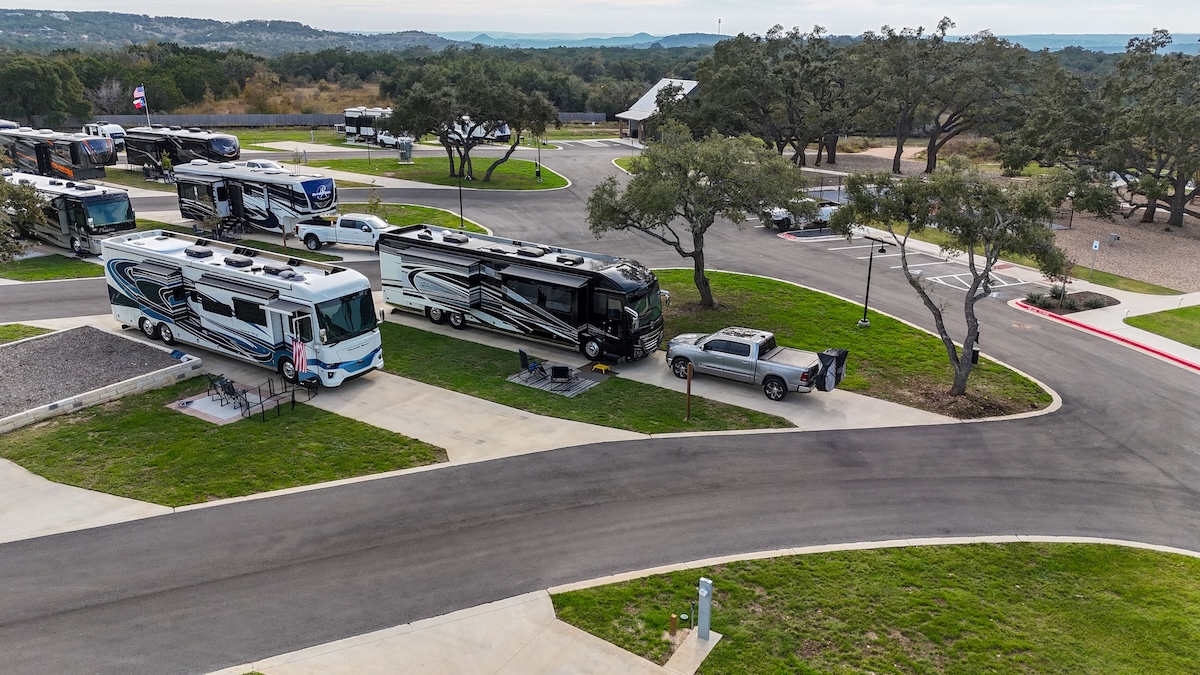
Horseshoe Ridge RV Resort in Wimberley hits all five — 124 full-hookup sites, hardwired fiber Wi-Fi at every site, big-rig-friendly pull-throughs, dog-friendly policies, and a central Hill Country location minutes from Jacob's Well and Blue Hole. For a fuller comparison of options, our roundup of luxury RV resorts in Texas covers what to weigh.
What RV gear do you need to pack?
The technical RV gear is what separates a stress-free trip from a frustrating one. None of it is glamorous and most of it lives in your storage bay year-round — but missing one piece can shut down a stay.
Hookup essentials. RV sewer hose with the right adapter (some parks use angled connections, others straight), drinking-water-rated freshwater hose, surge protector matched to your rig's amperage (30-amp or 50-amp), and extension cords sized for your setup. A 90-degree water elbow saves your hose threading from kinking at the spigot.
Setup gear. Leveling blocks (Lynx Levelers or wood blocks), wheel chocks, an RV-rated GPS that knows about low bridges, and a tire pressure gauge. The GPS matters — regular car GPS will route you under bridges you can't fit through, which is the kind of mistake that ends a trip.
Sleeping essentials. Comfortable bedding sized to your bunk, extra blankets for cool Hill Country nights (temperatures drop more than first-timers expect), and pillows you actually like — RV mattresses are firmer than home beds.
For maintenance basics before you leave (tire pressure, fluids, exterior inspection), our camper maintenance checklist covers what to verify before pulling out.
What food do you need to pack?
Meal planning is the easiest way to save trip stress. Pre-plan two to three days of meals, then keep ingredients flexible enough that you can adapt to what's available locally. Hill Country has excellent farmers' markets (Wimberley's runs the first Saturday of every month), BBQ in Driftwood and Lockhart, and wineries in Fredericksburg if you want to eat out for one or two meals.
Pantry staples. Rice, pasta, oats, canned beans, tuna, and soup handle most quick meals. Bring seasonings and condiments — the rig's pantry is too small to over-pack but too valuable to skip. Coffee (ground or pods if you have a single-serve maker), tea, and breakfast items keep mornings simple.
Fresh and frozen foods. Meat, cheese, eggs, fruits, vegetables, and dairy. Pre-chop vegetables and marinate meats at home before the trip — campsite prep is faster when the work's already done.
Cooking gear. Cast iron skillet (the most versatile piece of RV cookware), cooking pot, sharp knife, cutting board, aluminum foil, ziplock bags, biodegradable dish soap, and dish towels. A portable grill or camp stove handles outdoor cooking when you don't want to heat the rig in summer.
Storage tip: collapsible kitchenware (silicone bowls, fold-flat colanders) saves significant cabinet space without sacrificing function. A small clear bin under the sink for cleaning supplies keeps everything findable.
What clothing do you need for Hill Country weather?
Hill Country weather varies more than first-time visitors expect. Daytime summer temperatures push past 95°F. Nighttime in spring and fall drops into the 50s. Winter cold snaps can hit the 20s overnight. Pack for both extremes regardless of the season.
Light, breathable clothing in moisture-wicking fabrics. Sun hat and sunglasses (the Texas sun earns the warning). Swimsuit for river and swimming-hole days at Jacob's Well, Blue Hole, or the Guadalupe. Reef-safe sunscreen if you're swimming in natural springs. Lightweight cover-up for evenings when temperatures drop and mosquitoes come out.

Fleece jackets and hoodies for layering. Wool socks (they beat cotton for both warmth and dampness). Gloves and thermal underwear for cold snaps. Long pants for hiking — Hill Country brush includes cedar and oak that scratch bare legs. A warm hat for early mornings around the fire pit.
Year-round essentials regardless of season: rain gear (sudden Hill Country thunderstorms are common in spring and fall), sturdy closed-toe shoes for hiking, comfortable walking shoes for town days, and at least one outfit you can change into after a wet activity. Vacuum-sealed clothing bags save significant closet space.
What safety gear should you bring?
Safety gear is the category most travelers underpack until something goes wrong. None of it takes much space; all of it matters when you need it.
Bandages, antiseptic wipes, gauze, antibiotic ointment, pain relievers, antihistamines, prescription medications (with extra refills for longer trips), insect repellent, sunscreen, aloe for sunburns, and tweezers for splinters. Add kid-strength meds if traveling with children, and pet-safe options if traveling with dogs.
Emergency gear. Flashlights with extra batteries (one per person — Hill Country gets genuinely dark), a headlamp for hands-free use, roadside emergency kit (jumper cables, reflective triangles, a basic toolset), spare tire with the tools to change it, and a fire extinguisher inside the rig.
Documentation. Vehicle registration, insurance papers, campground reservation confirmation, and emergency contact list. Keep both digital copies (in your phone or cloud storage) and physical copies in a folder in the rig — cell service is spotty enough in parts of Hill Country that you can't always rely on digital alone.
Save the address and phone number of the nearest emergency room and your campground's office before you leave, in case you need them when signal drops. For a more detailed look at on-site safety considerations, our RV resort safety checklist walks through it.
What outdoor and entertainment gear is worth bringing?
Hill Country has enough outdoor activities to fill a week. Pack for both planned activities (hiking, swimming, tubing) and slower evenings at the campsite.
Hiking boots with good grip (Hill Country limestone is slick when wet), a daypack with water bottle pockets, fishing gear and Texas freshwater license if planning to fish, a kayak or paddleboard if your tow vehicle can carry one. Binoculars for wildlife watching — Hill Country birding is excellent year-round.

Camping chairs (one per person), a small folding table, lighter and long matches, s'mores supplies, marshmallow roasting sticks, and a fire pit cover if your site has an open ring. Most resorts (including Horseshoe Ridge) sell firewood on-site through the Trading Post — easier than transporting it.
Slow-time entertainment. A few books, a deck of cards, a board game that travels well, and a camera or GoPro for capturing the trip. If you're traveling with kids, throw in a soccer ball, frisbee, or cornhole set — most resort-style parks have open green space that handles them.
For specifics on activities to plan around your trip, our roundup of 8 best things to do in Wimberley, Texas covers the local highlights. The amenity guide for Texas RV travelers covers what to expect on-property at most resort-style parks.
Do you need tech gear for an RV trip?
If you're remote-working, streaming, or staying longer than a weekend — yes. The right tech kit cuts most of the frustration out of staying connected on the road.
Connectivity gear. Wi-Fi booster or signal extender if you're staying somewhere without fiber, mobile hotspot as backup (Verizon and AT&T cover most of Hill Country, T-Mobile less so), and a power bank capable of charging a laptop. Solar panel for boondocking, though most resort-style stays don't need it.
Navigation. An RV-rated GPS for routing (the same one mentioned in the gear section earlier), plus downloaded offline maps on your phone for the spotty-coverage stretches between small towns. Paper maps as backup — they don't run out of battery.
If reliable connectivity is non-negotiable, prioritize parks that advertise fiber Wi-Fi at every site rather than shared parkwide signal. The difference is night and day for remote work.
What do pet owners need to pack?
Pets add about 15-20 specific items to the checklist. Food and water bowls (collapsible silicone ones save space), at least 50% more food than you think you'll need, a leash and backup leash, harness, current ID tags with your phone number, a recent photo of the pet on your phone in case they get lost, and waste bags.
Comfort items. The pet's familiar bed and a few favorite toys help with the transition to an unfamiliar space. A crate or pen for times when you need to leave them inside the rig — Texas summer heat makes leaving pets in vehicles dangerous even with windows cracked.
Health and safety. Vaccination records (some parks require proof), prescription medications with extras, a basic pet first aid kit, tick prevention (Hill Country has them), and the contact information for the nearest emergency vet. Confirm the park's pet policy before booking — breed restrictions and additional fees vary. Our roundup of the best pet-friendly RV resorts in Texas covers what to look for.
What's the pre-departure checklist?
The last 30 minutes before leaving are when most trip-killers happen. Run this final pass before pulling out:
Mechanical. Check tire pressure on all rig and tow tires (cold tires, before driving). Verify fluid levels — engine oil, coolant, brake fluid, washer fluid. Test running and brake lights, including trailer lights. Confirm the battery is charged and connected.
Interior. Secure all loose items — cabinets latched, drawers locked, anything heavy on the floor or in a low cabinet. Slides retracted. TVs and electronics secured. Refrigerator door latched. Anything that can shift while driving will shift while driving.
Utilities. Propane turned off before travel (a fire hazard in case of accident). Water heater off. Awning fully retracted and locked. Steps retracted. Antenna lowered. Hitch and safety chains secured if towing.
Documentation and reservations. Double-check your campground reservation with the right dates and site number. Confirm pet policy and any required documentation. Share your route and arrival ETA with someone at home in case of emergencies.
One last sweep. Walk around the outside of the rig before pulling away. Half the worst trip stories start with something missed on this final walk-around — a hose still connected, a chock under a wheel, the cable hookup still plugged in. Sixty seconds of walking saves real money.
Frequently asked questions about RV camping checklists
What are the most-forgotten RV camping items?
First-timers forget surge protectors, sewer hose adapters, leveling blocks, and a real first aid kit most often. Repeat RVers forget the small stuff — extra propane, paper maps for spotty cell areas, backup shoes for wet ground, and ID tags for pets. A printed checklist catches both categories.
How early should I start packing for an RV trip?
Start the gear and pantry pack three or four days before departure. Fresh food gets loaded the day before or the morning of. Pre-chop vegetables and marinate meats the night before so campsite prep is faster. The final mechanical and pre-departure walk-around happens within the hour before pulling out.
What's the difference between summer and winter RV packing in Texas?
Summer means lightweight breathable clothing, sun hats, extra water, and swimsuits for swimming holes — plus heavier use of A/C, which puts more demand on your electrical hookup. Winter means fleece layers, wool socks, thermal underwear, gloves, and a heater check before the trip. Both seasons need rain gear. Pack for both extremes year-round since Hill Country day-to-night swings can hit 40°F.
Do I need to pack firewood?
Most resort-style parks sell firewood on-site — Horseshoe Ridge keeps it stocked at the 24/7 Trading Post on the honor system. Transporting firewood is also restricted in many areas to prevent spreading tree pests, so buying locally is the simpler call.
Can I pack lighter and buy supplies after I arrive?
Yes — Wimberley, Dripping Springs, and Fredericksburg all have grocery stores, hardware stores, and outdoor retailers within easy driving distance. Many resort-style parks also keep convenience essentials on-site (snacks, drinks, RV supplies, firewood). Pack the technical RV gear and safety basics; supplement food and small items locally if you'd rather travel light.
What if I'm traveling with kids?
Add kid-strength meds to the first aid kit, backup outfits for wet activities, kid headphones for the drive, outdoor games (cornhole, frisbees, soccer balls), and water shoes for swimming holes. Our roundup of family-friendly RV resorts in Texas covers what to look for in a family-appropriate park.